
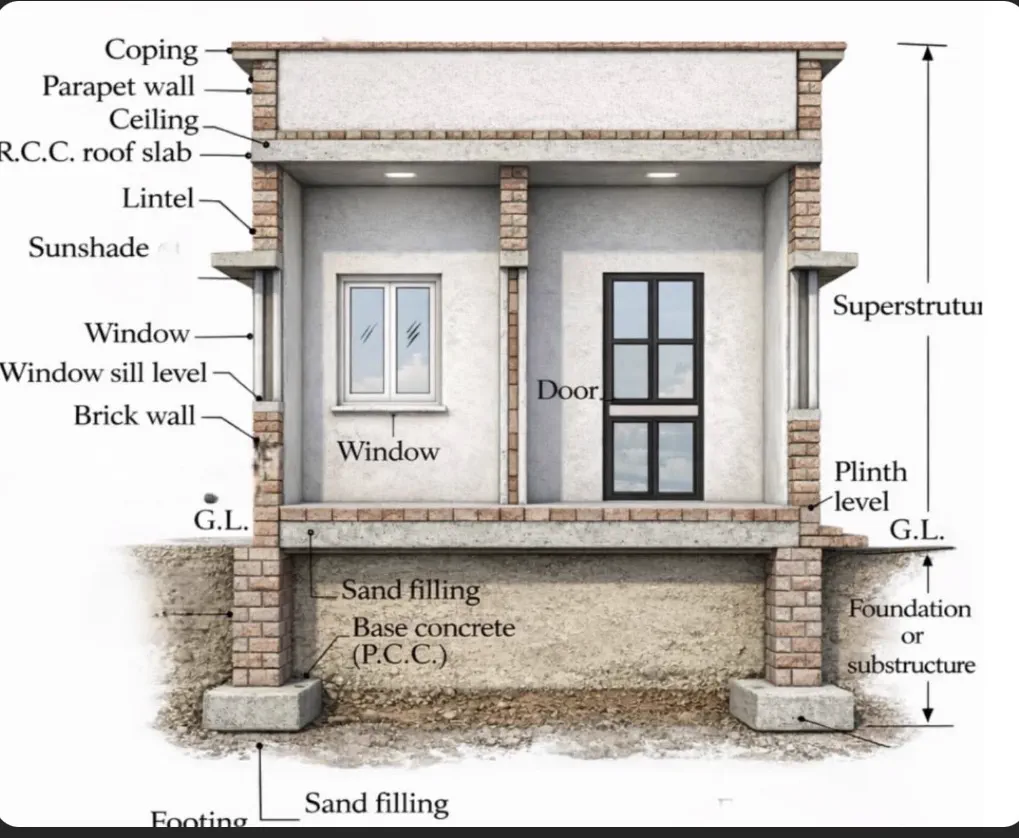
Quick answer: The most common defects in Pakistani houses are plaster and shrinkage cracks, structural cracks caused by foundation settlement or overloading, roof and bathroom seepage, and rising damp from a missing or damaged DPC. Most are preventable during construction through proper soil assessment, engineered foundations, correct concrete and curing, a continuous DPC, waterproofing and pressure-tested plumbing. Wide, growing, diagonal or stepped cracks should be checked by a structural engineer.
Types of Cracks and What They Mean
| Crack type | Typical appearance | Likely cause | Seriousness |
|---|---|---|---|
| Hairline plaster cracks | Fine, random, map-like | Plaster shrinkage, poor curing | Usually cosmetic |
| Cracks at wall-column or wall-beam joints | Straight lines along junctions | Different materials moving differently | Usually minor; prevent with mesh at joints |
| Diagonal cracks from door and window corners | 45-degree lines from openings | Settlement, missing or short lintels | Needs investigation |
| Stepped cracks in brickwork | Staircase pattern along mortar joints | Foundation settlement | Serious if widening |
| Horizontal cracks in walls | Long horizontal lines | Roof slab movement, soil pressure | Needs investigation |
| Slab or beam cracks | Cracks on the underside or near supports | Overloading, poor reinforcement, early prop removal | Consult an engineer |
Warning signs: cracks wider than about 3 mm, cracks that keep growing, doors and windows that start jamming, sloping floors, or rust stains from concrete. These need a structural assessment.
Causes of Seepage and Dampness
- Roof leaks: No slope, failed waterproofing, cracks at parapet joints. See our roof waterproofing guide.
- Bathroom leaks: Untested pipes, missing waterproofing under tiles, poor floor-trap connections.
- Rising damp: Missing, broken or bridged DPC lets ground moisture rise into walls, causing peeling paint and salt deposits.
- Water tank leaks: Poor concrete or missing waterproofing in underground and overhead tanks.
- External wall seepage: Cracked plaster, missing drips on sills and shades.
Causes of Settlement
- Building on filled or weak soil without investigation
- Foundations too shallow or too small for the loads
- Poorly compacted filling under floors
- Leaking sewer or water pipes softening the soil
- Excavation next door without proper shoring
How to Prevent Defects During Construction
- Soil investigation: Especially for basements, filled plots and heavy structures.
- Engineered structure: Foundations, columns, beams and slabs designed by a qualified structural engineer. See our structural consultancy.
- Correct materials and ratios: See our concrete mix guide and steel grade guide.
- Proper curing and prop removal: See our curing guide.
- Continuous DPC at plinth level, not bridged by plaster or flooring.
- Layered compaction of fill under floors, with termite treatment before floor concrete.
- Lintels with adequate bearing over all openings.
- Chicken mesh at junctions of brickwork and concrete before plastering.
- Pressure-tested plumbing before concealing pipes.
- Waterproofing of roofs, bathrooms, tanks and basements.
Use our stage-by-stage construction quality checklist to verify each item.
Repairing Existing Defects
- Find the cause first: Patching a crack or repainting a damp wall without fixing the source only hides the problem.
- Monitor cracks: Mark crack ends and dates, or fix glass or plaster tell-tales to see if they grow.
- Fix leaks before repairing plaster and paint.
- Structural cracks may need strengthening, such as injection, jacketing or underpinning, designed by an engineer.
Planet Builders prevents defects through engineer-supervised grey structure construction, and our structural team assesses and repairs cracks and seepage in existing buildings.
Frequently Asked Questions
Are cracks in a new house normal?
Fine hairline plaster cracks are common and usually cosmetic. Wide, growing, diagonal or stepped cracks are not normal and should be checked.
What causes dampness at the bottom of walls?
Usually rising damp from a missing or damaged DPC, or leaks from nearby pipes and drains.
How can I tell if a crack is structural?
Cracks wider than about 3 mm, cracks that grow over time, stepped cracks in brickwork, or cracks with jamming doors and sloping floors may be structural. Get an engineer's assessment.
Can seepage damage the structure?
Yes. Long-term seepage can corrode reinforcement, causing concrete to crack and spall, which weakens slabs and beams.
Worried about cracks or seepage? Contact Planet Builders & Interiors for a structural assessment.