
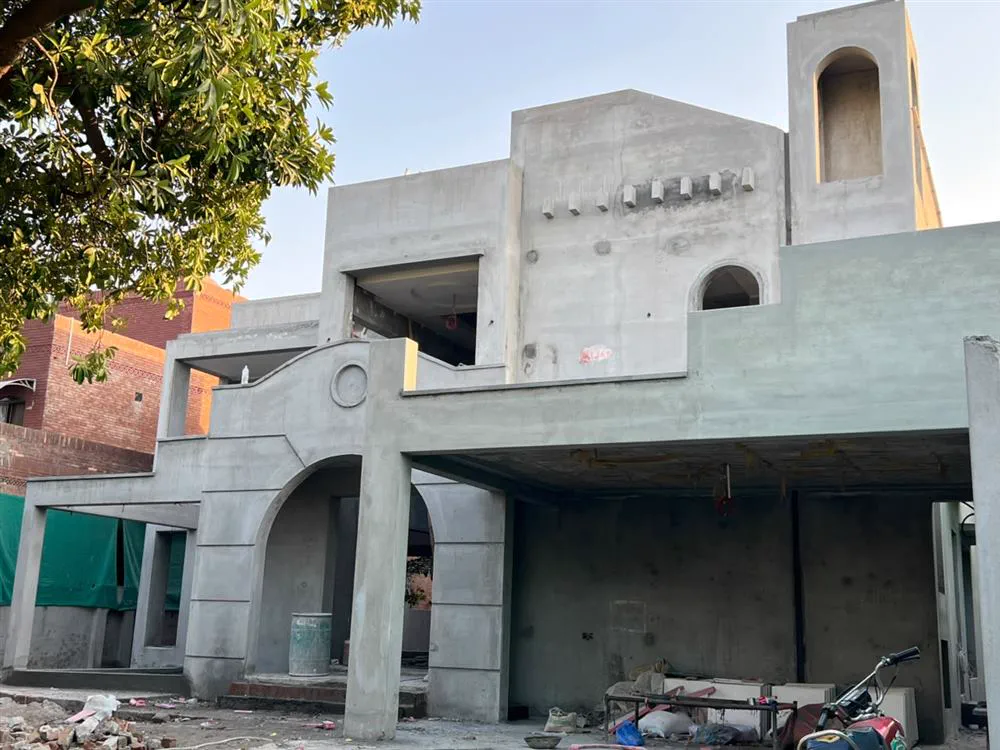
Quick answer: Lahore rarely freezes, but winter nights in December and January often fall to 3 to 8 C, and concrete gains strength much more slowly in cold weather. Pour in the late morning so the concrete sets in the warmest part of the day, cover fresh concrete overnight with plastic sheets and hessian, keep curing for at least 10 to 14 days, and expect the engineer to leave props in longer than in summer. Never use chloride-based accelerators in reinforced concrete.
How Cold Weather Affects Concrete
- Slower setting and strength gain: Concrete may take longer to reach the strength needed to remove props safely.
- Risk of early damage: If very young concrete freezes, its strength can be permanently reduced. This is rare in Lahore but possible on cold, clear nights.
- Fog and humidity: Fog slows surface drying, which delays finishing of slabs and plaster, and paint may not cure properly.
- Short working days: Fog can delay material deliveries and shorten the usable day for pours.
Pouring Precautions for Winter
- Pour between late morning and early afternoon: Avoid evening pours that set during the coldest hours.
- Check the night forecast: Postpone major slab pours if temperatures near freezing are expected.
- Do not pour on frozen or frosty surfaces: Shuttering, steel and the base must be free of frost and standing water.
- Use the correct water-cement ratio: Do not add extra water to make placing easier. See our concrete mix ratio guide.
- Admixtures only as approved: Use only non-chloride accelerators or plasticizers approved by the engineer. Chlorides rust steel reinforcement.
- Protect cement storage: Winter dampness causes lumps. Store bags on raised platforms under cover.
Curing in Winter
| Element | Summer | Winter (cold weather) |
|---|---|---|
| Roof slab | 10 - 14 days | 10 - 14 days, protected from cold at night |
| Columns and beams | 10 - 14 days | 10 - 14 days, wrapped in hessian and plastic |
| Brick masonry and plaster | 7 - 10 days | 7 - 10 days, lighter watering in fog |
- Cover at night: Plastic sheets with hessian on top hold moisture and warmth.
- Water in the daytime: Do ponding and spraying in the day so surfaces are not soaked during the coldest hours.
- Keep curing going: Fog keeps the surface damp, but it does not replace proper curing.
For summer and monsoon precautions, see our concrete curing guide.
Formwork and Prop Removal in Winter
Standard removal times assume normal temperatures. In cold weather, the engineer will usually ask for props to stay in longer, often several extra days for slabs and beams. Where there is doubt, cube tests or a test on site can confirm the concrete has reached the required strength. Never load a new slab with bricks or materials before the engineer allows it.
Plaster, Paint and Finishing Work in Winter
- Plaster: Works well in mild winter days. Avoid plastering late in the day before a very cold night.
- Paint and putty: Most paints and putties need a minimum temperature and dry surfaces. Check the manufacturer's limits and avoid painting on foggy mornings.
- Tile adhesives and grout: Also set slowly in the cold. Allow extra time before walking on new floors.
- Waterproofing: Many coatings need dry conditions. Plan roof waterproofing for dry, sunny spells. See our roof waterproofing guide.
Winter Also Means Smog Season
The coldest months in Lahore overlap with smog season, when dust-control rules are strictly enforced and construction has been paused in some past years. Plan both together. See smog season construction rules and our construction timeline guide.
Planet Builders follows written pouring, curing and formwork schedules adjusted for the season on every grey structure project.
Frequently Asked Questions
Can concrete be poured in winter in Lahore?
Yes. Lahore's winter is mild enough for concreting with precautions: pour in the late morning, cover the concrete at night and cure properly. Postpone pours if near-freezing nights are forecast.
How long should slab props stay in winter?
Longer than in summer. The structural engineer should decide, often adding several days to normal times, and cube tests can confirm strength.
Does fog affect concrete curing?
Fog keeps the surface damp, which helps curing a little, but it also slows finishing and setting. Regular curing is still needed.
Can I paint my house in December or January?
Yes, on dry, mild days. Avoid foggy mornings and very cold evenings, and follow the paint manufacturer's minimum temperature.
Want your house built correctly through every season? Contact Planet Builders & Interiors.