
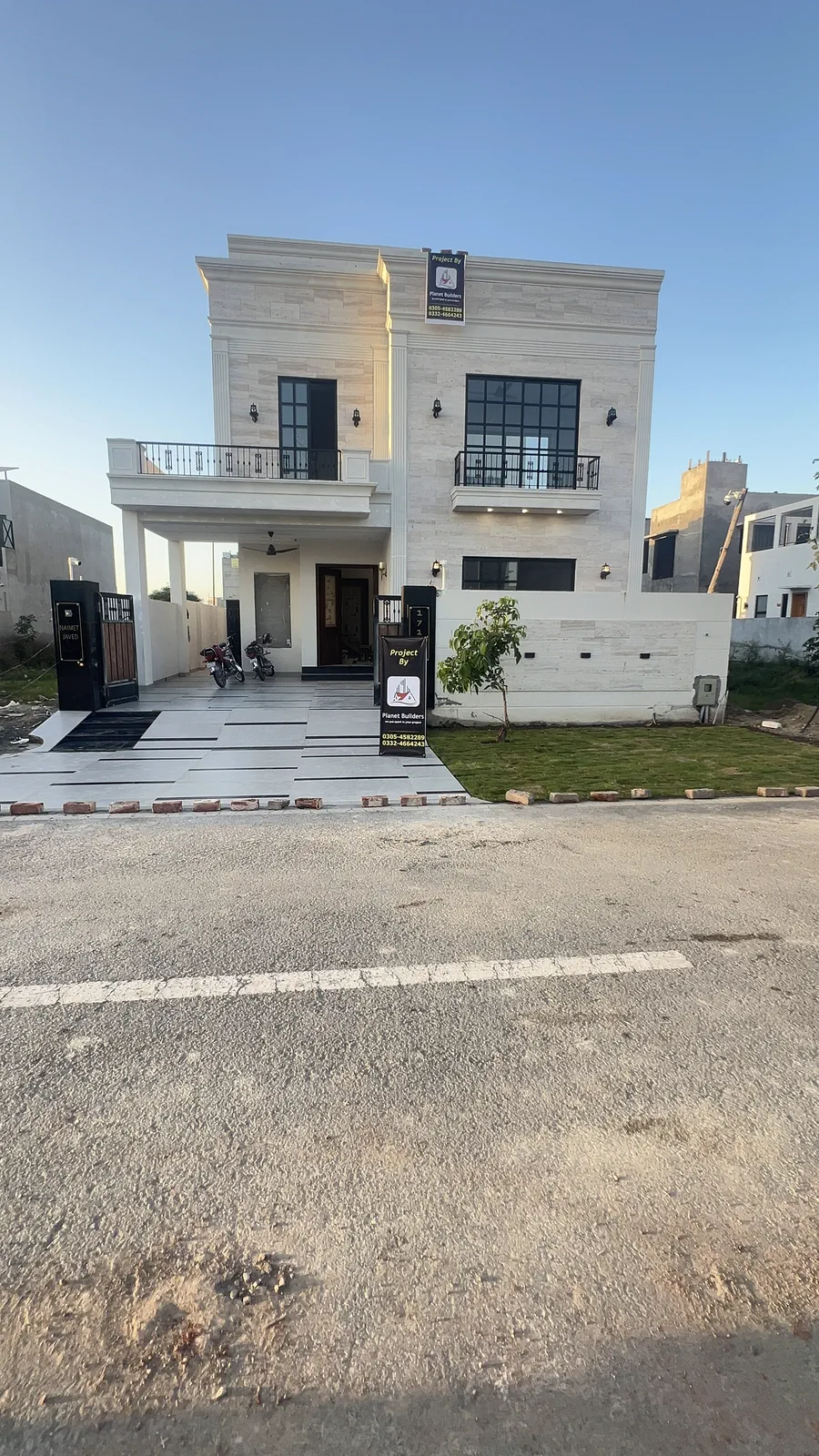
Quick answer: To build a flood-resilient house in Lahore, first check whether the plot is in or near the Ravi floodplain or a low-lying area. Then raise the plinth well above the road (commonly 2 to 3 ft above the road crown in low areas, subject to your society's rules), install non-return valves on sewer lines, design proper roof and site drainage, keep a continuous DPC, use water-resistant materials on the ground floor, and think twice before building a basement in a flood-prone area.
Why This Matters Now
- In the 2025 floods, thousands of houses were destroyed across Punjab, and the Ravi flooded several Lahore localities.
- In July 2026, six straight days of monsoon rain hit Lahore, and a Ravi overflow inundated a housing society near Chuhang on the city's outskirts.
- Satellite studies show Lahore has expanded steadily into the Ravi floodplain since 1990, while phase 2 of the city's flood embankments has been delayed by encroachments.
Urban flooding from heavy rain is also common in older and low-lying neighbourhoods, even far from the river.
Step 1: Check Your Plot Before You Design
- Location: Is the plot in or near the Ravi riverbed, the Ravi Urban Development Authority (RUDA) area or a low-lying scheme? Check the society's approval status and the flood history of the area.
- Ask the neighbours: Long-time residents know how high the water reached in 2025 and in past monsoons.
- Road and sewer levels: Note the road crown level, the main sewer level and whether the street drains well after rain.
- Soil: Filled or riverbed soil may need a soil investigation and a stronger foundation. See structural consultancy.
- Approval: Make sure the map is approved by the right authority. See who approves house maps in Lahore.
Step 2: Set the Right Plinth Height
| Site condition | Typical plinth above road crown* |
|---|---|
| Well-drained, elevated society | 1.5 - 2 ft |
| Area with occasional rainwater ponding | 2 - 3 ft |
| Low-lying or near-river area | Above the highest recorded flood level, set by the engineer |
*Follow your society or LDA plinth rules. Remember that roads are often raised over the years, so a plinth that looks high today can end up level with the road in a decade.
Step 3: Build Flood Resilience into the Structure
- Continuous DPC at plinth level, not bridged by plaster or flooring.
- Well-compacted fill under the floor, placed and compacted in layers, so it does not settle when soaked.
- Good concrete and curing for foundations and plinth beams. See our curing guide.
- Cement-sand plaster on lower walls rather than gypsum, which is damaged by water.
- Tiled or stone floors on the ground floor instead of wooden flooring in risk areas.
Step 4: Drainage and Sewerage
- Non-return (backflow) valves on the main sewer connection stop street sewage from flowing back into the house when the main line overflows.
- Roof drainage: Enough rainwater pipes, correctly sized, with the roof sloped to them. Blocked or too few pipes cause roof ponding and leaks. See roof waterproofing.
- Site slope: Slope the porch and lawn away from the house, toward drains.
- Sealed underground tank: Seal manholes and waterproof the tank so flood water cannot contaminate drinking water.
- Recharge or soakage well: Where soil and rules allow, a rainwater recharge well reduces ponding and helps groundwater.
Step 5: Protect Electrical and Mechanical Services
- Install the main DB, meter and inverter at a safe height above possible flood level.
- Put ground-floor sockets higher than usual in flood-risk areas.
- Keep pumps, generators and battery banks on raised platforms.
Should You Build a Basement in a Flood-Prone Area?
Basements in low-lying areas need a full waterproofing system, a raised ramp hump at the entrance, a sump with an automatic pump, and backup power. If the area floods regularly, it is often safer to skip the basement. Our basement construction cost guide covers the extra waterproofing costs.
Planet Builders sets plinth levels, drainage and waterproofing for each site based on its actual flood risk, as part of our grey structure work.
Frequently Asked Questions
How high should the plinth be in Lahore?
Commonly 1.5 to 2 ft above the road crown in well-drained areas and 2 to 3 ft in low-lying areas, subject to society or LDA rules. Near the river, the engineer should set it above the highest recorded flood level.
How do I know if my plot is in a flood-prone area?
Check its distance from the Ravi and drains, the 2025 and past flood history, the society's approval status, and ask neighbours how high water reached. A site visit after heavy rain is very revealing.
What is a non-return valve in house sewerage?
It is a valve on the sewer connection that lets waste flow out but stops sewage from flowing back into the house when the main sewer overflows.
Can an existing house be made more flood-resilient?
Yes, partly. Backflow valves, better roof drainage, raised electrical points, sealed tanks and site regrading can all be added. Raising the plinth of an existing house is much harder and costlier.
Building on a plot with flood or drainage concerns? Get advice from Planet Builders & Interiors.