
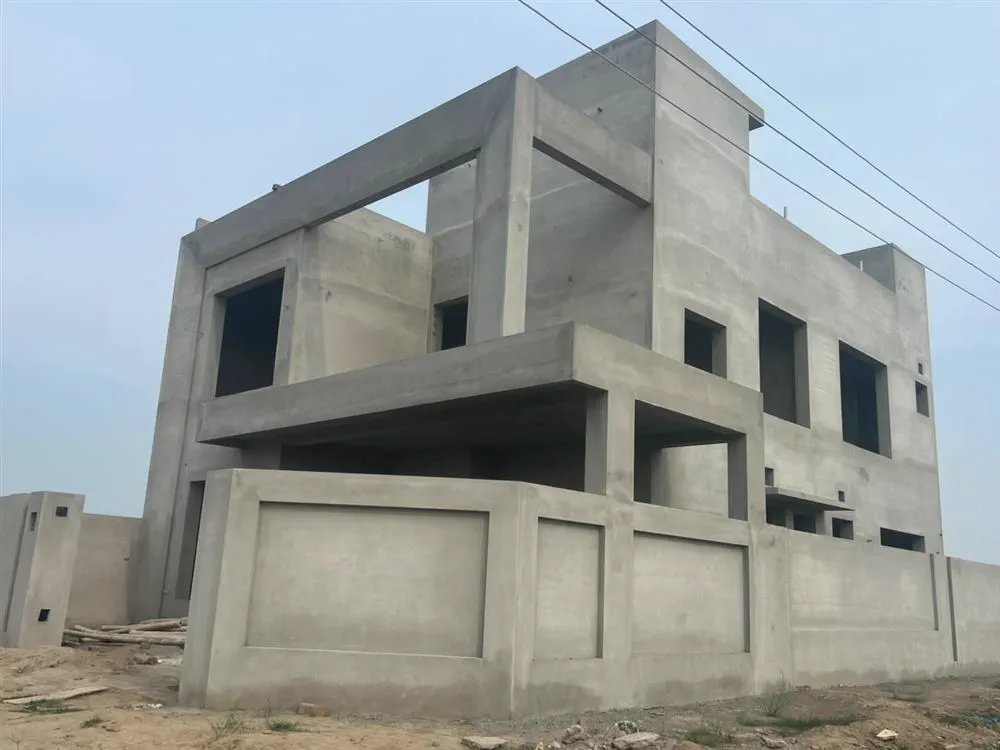
Quick answer: Margalla crush is generally regarded as the higher-quality coarse aggregate for structural concrete because it is hard, angular and usually cleaner, especially when machine-crushed and screened. Sargodha crush is widely used in Lahore, costs less because of shorter transport distances, and is suitable for many uses, but quality varies more between crushers. For columns, beams and slabs, choose clean, well-graded crush approved by your engineer, whatever the source.
Margalla vs Sargodha Crush Compared
| Property | Margalla crush | Sargodha crush |
|---|---|---|
| Source region | Margalla hills and Taxila area quarries | Sargodha region quarries |
| Typical appearance | Light grey to bluish, angular | Darker grey to blackish |
| Consistency | Generally consistent from reputable plants | Varies more by crusher |
| Dust and fines | Usually lower when screened | Can be higher; washing may be needed |
| Cost in Lahore | Higher | Lower |
| Common use | RCC slabs, beams, columns, premium specifications | PCC, floors, general concrete; RCC where approved |
In the Planet Builders A, A+ and A++ comparison, the A package uses Sargodha crush, A+ uses Margalla crush, and A++ uses plant-produced Margalla crush.
Crush Sizes and Where They Are Used
| Size | Common name | Use |
|---|---|---|
| 3/8 to 1/2 inch | Fine crush / "bajri" | Thin slabs, shades, precast items, toppings |
| 3/4 inch down | Standard crush | Slabs, beams, columns (most RCC) |
| 1 to 1.5 inch | Coarse crush | Mass concrete, PCC, foundations |
The maximum size must suit the thinnest section and the spacing between steel bars, so the engineer's specification takes priority.
What Makes Good Crush?
- Hard and strong: It should not break easily when struck with a hammer.
- Angular and cubical: Avoid flat, flaky or elongated pieces, which weaken concrete.
- Clean: Free from dust, clay, mud and organic matter.
- Well graded: A mix of sizes within the specified range fills voids better.
Simple Site Checks
- Dust test: Rub a handful of crush; heavy dust on your hands means washing is needed.
- Shape check: Count flat or elongated pieces in a sample; they should be few.
- Hammer test: Good aggregate resists breaking and does not crumble.
- Size check: Confirm maximum size matches the specification.
- Volume check: Measure the truck body to confirm the cft delivered.
Does Crush Source Really Affect Strength?
Yes, but it is one factor among many. Clean, strong, well-graded aggregate helps concrete reach its target strength. However, the correct mix ratio, low water content, proper vibration and curing matter just as much. See our concrete mix ratio guide and curing guide.
Quantities and Cost
A typical house uses about 1.2 to 1.4 cft of crush per sq ft of covered area. For a 10 marla double storey, that is roughly 4,000 to 4,800 cft. Use our quantity guide to calculate your needs, and pair crush with the right sand from our Ravi vs Chenab sand guide.
Planet Builders writes aggregate sources and sizes into every contract and checks deliveries on site. Learn about our grey structure service.
Frequently Asked Questions
Which crush is best for a roof slab?
Clean, angular, well-graded crush of 3/4 inch down, commonly Margalla crush, is preferred for roof slabs. Follow your engineer's specification.
Is Sargodha crush bad?
No. Good-quality Sargodha crush from a reliable crusher is widely used. Quality simply varies more, so check each delivery for dust and shape.
What size crush is used for columns?
Usually 3/4 inch down, but congested reinforcement may need smaller aggregate. The engineer should confirm.
Should crush be washed?
If it carries visible dust or clay, washing before use improves bond and concrete strength.
Need help specifying materials? Contact Planet Builders & Interiors.